Creating a Cohesive Platform Experience
Client
Neurons / Platform Experience Redesign
Year
2025
Redesigned the Neurons AI entry experience and navigation system to transform the product from a collection of isolated tools into a cohesive platform experience. The work introduced a centralized landing page, unified navigation patterns, and clearer pathways between workflows to improve onboarding, discoverability, and long-term engagement.
Scope of Work
Problem
As Neurons AI expanded across workflows and use cases, the platform experience became increasingly fragmented.
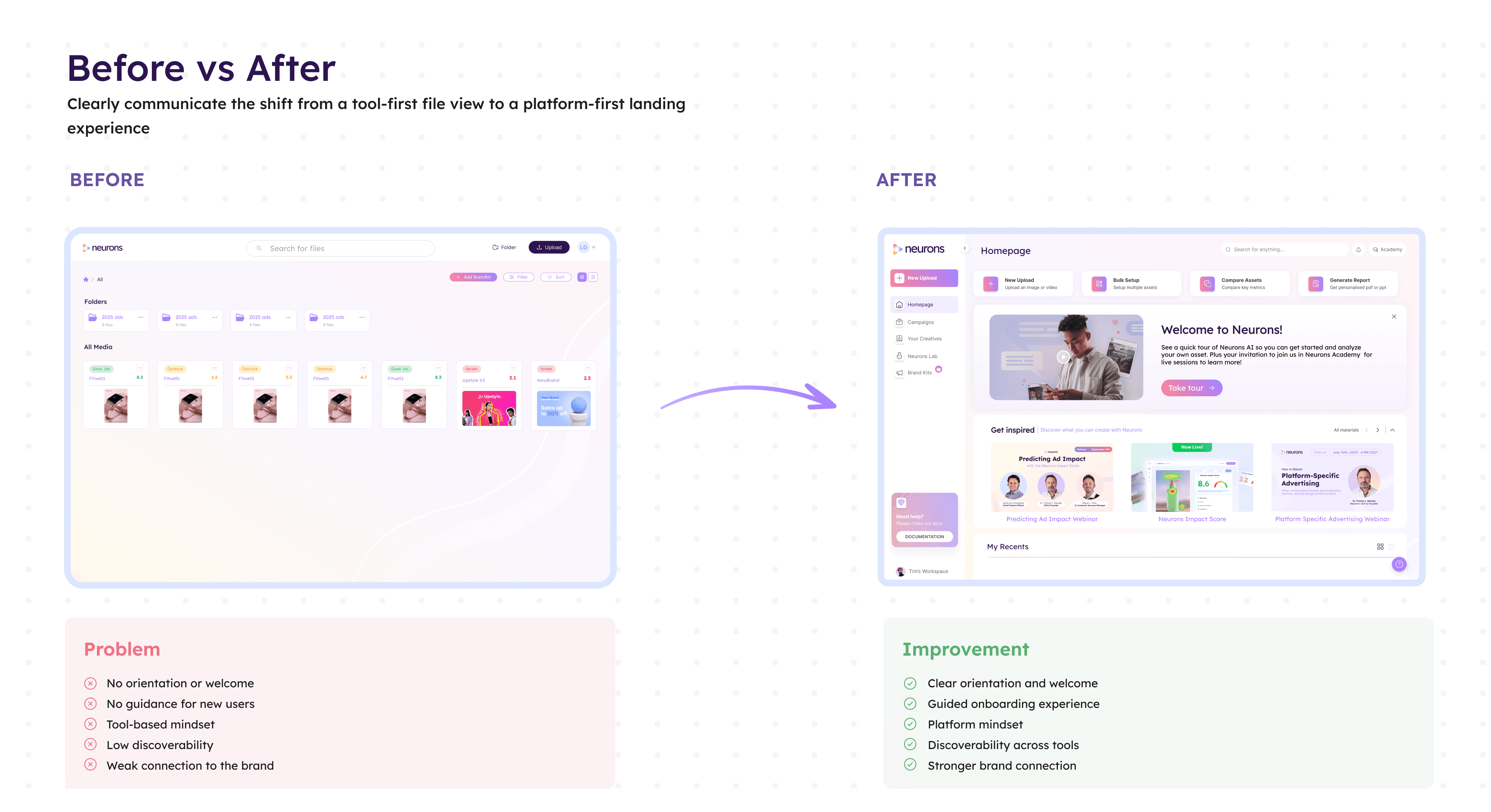
Users landed directly into a folder and files interface immediately after login. While functional for experienced users, this created an abrupt and transactional experience that lacked orientation, onboarding, or any sense of platform context. The product behaved like a collection of utilities rather than a cohesive system.
New users received little guidance on:
where to begin
what capabilities existed
how workflows connected together
Returning users similarly lacked meaningful entry points into the broader ecosystem, reinforcing repetitive behavior around a single primary workflow rather than exploration of the platform.
At the same time, navigation patterns had diverged significantly across tools and modules. Different sections introduced:
inconsistent menu placement
varying hierarchy structures
conflicting interaction patterns
disconnected terminology
As users moved between workflows, the platform lost predictability and continuity.
This fragmentation increased:
cognitive load
onboarding friction
feature invisibility
navigation uncertainty
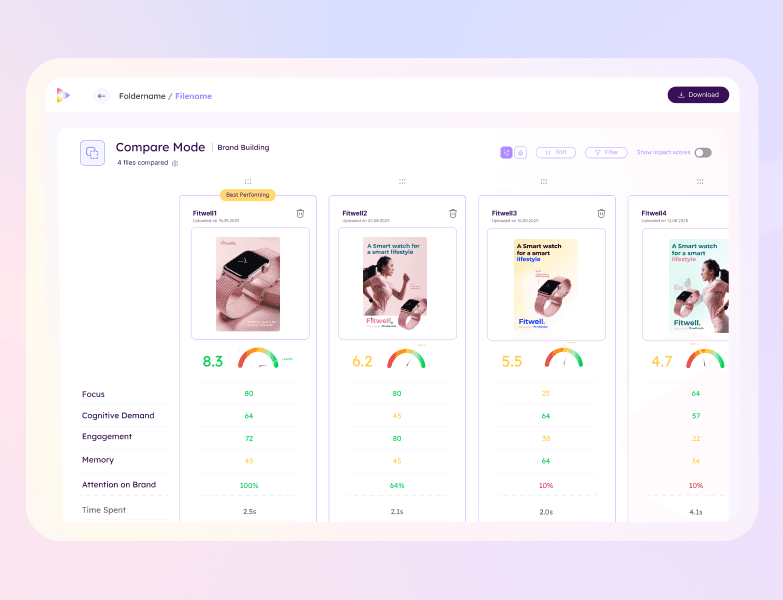
UX audits showed that users frequently struggled to relocate tools when switching contexts, particularly across advanced workflows. As the platform continued scaling, the lack of a unified navigation foundation became both a usability issue and a scalability risk.
Insight
The problem was not the absence of a homepage.
The problem was the absence of a platform layer.
Neurons AI had evolved beyond a single-tool workflow, but the product experience still treated every feature as an isolated destination. Users were entering directly into execution without orientation, discovery, or understanding of the broader ecosystem.
The redesign reframed the experience around platform continuity.
Rather than optimizing individual tools independently, the focus shifted toward creating a shared structural layer that unified navigation, onboarding, discovery, and workflow transitions into a cohesive experience.
Approach
Platform Entry Experience
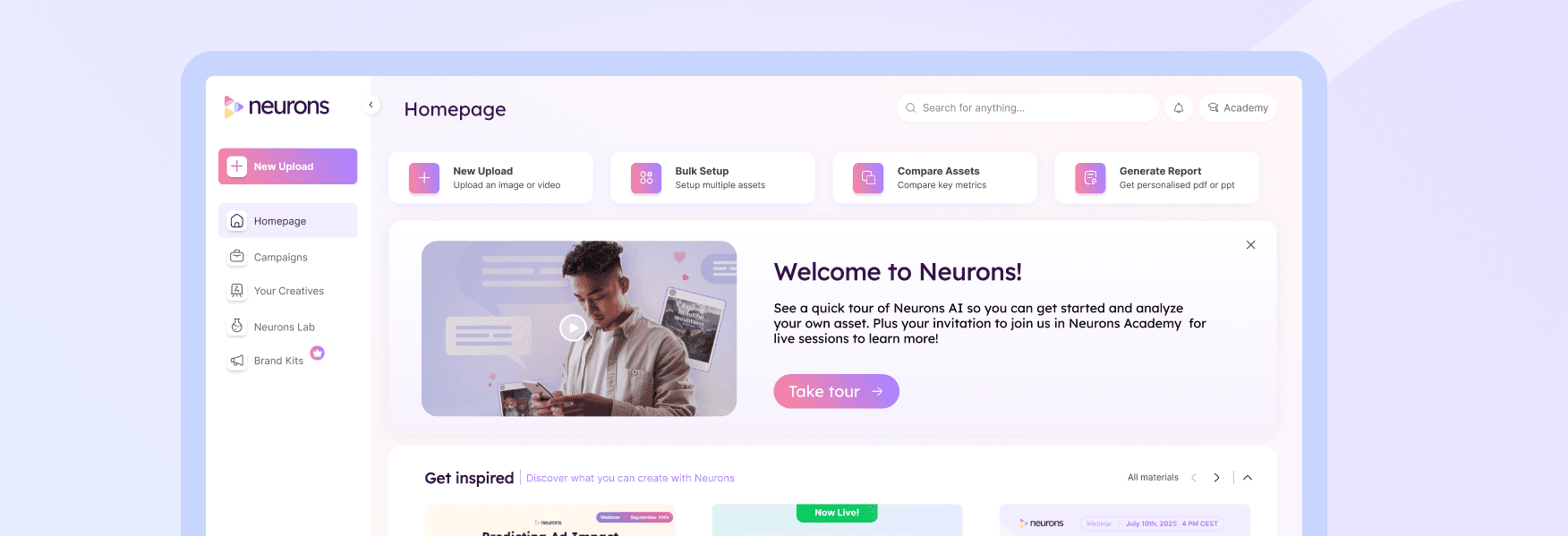
The redesign introduced the first dedicated landing experience for Neurons AI.
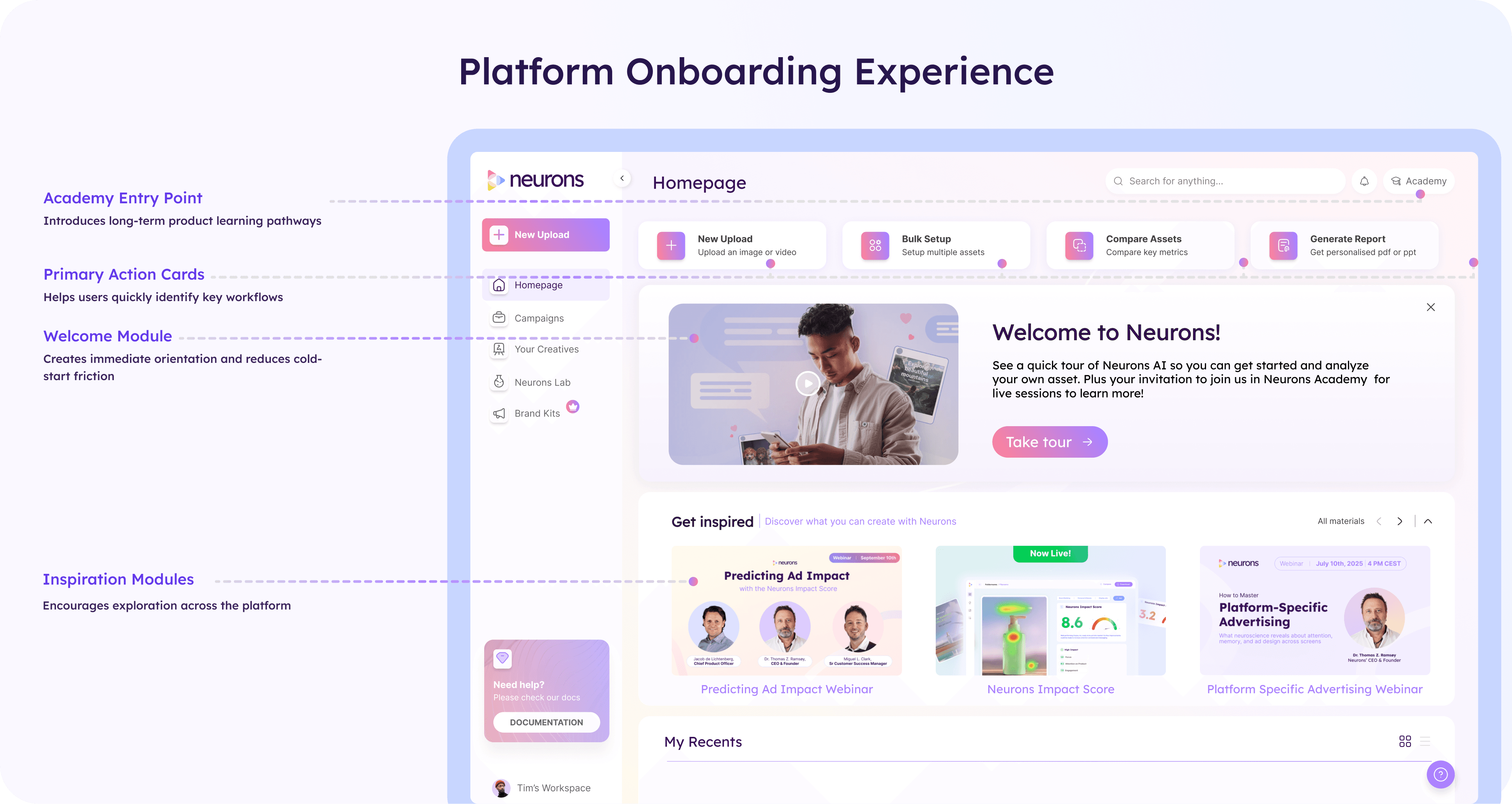
Instead of dropping users directly into a folder structure, the new homepage established:
orientation
platform awareness
workflow entry points
onboarding pathways
The page was designed to balance immediate utility with ecosystem visibility.
Primary workflows such as uploads, comparison, and reporting remained accessible, while educational and discovery-focused modules introduced users to broader platform capabilities without disrupting task efficiency.
This transformed the product entry point from:
a storage-oriented interface
to:a guided platform experience.
Unified Navigation Architecture
A shared navigation framework was introduced across core workflows and tools.
The redesign standardized:
hierarchy
placement
iconography
interaction behavior
navigation grouping
This created continuity between previously disconnected experiences and reduced the cognitive overhead of switching between modules.
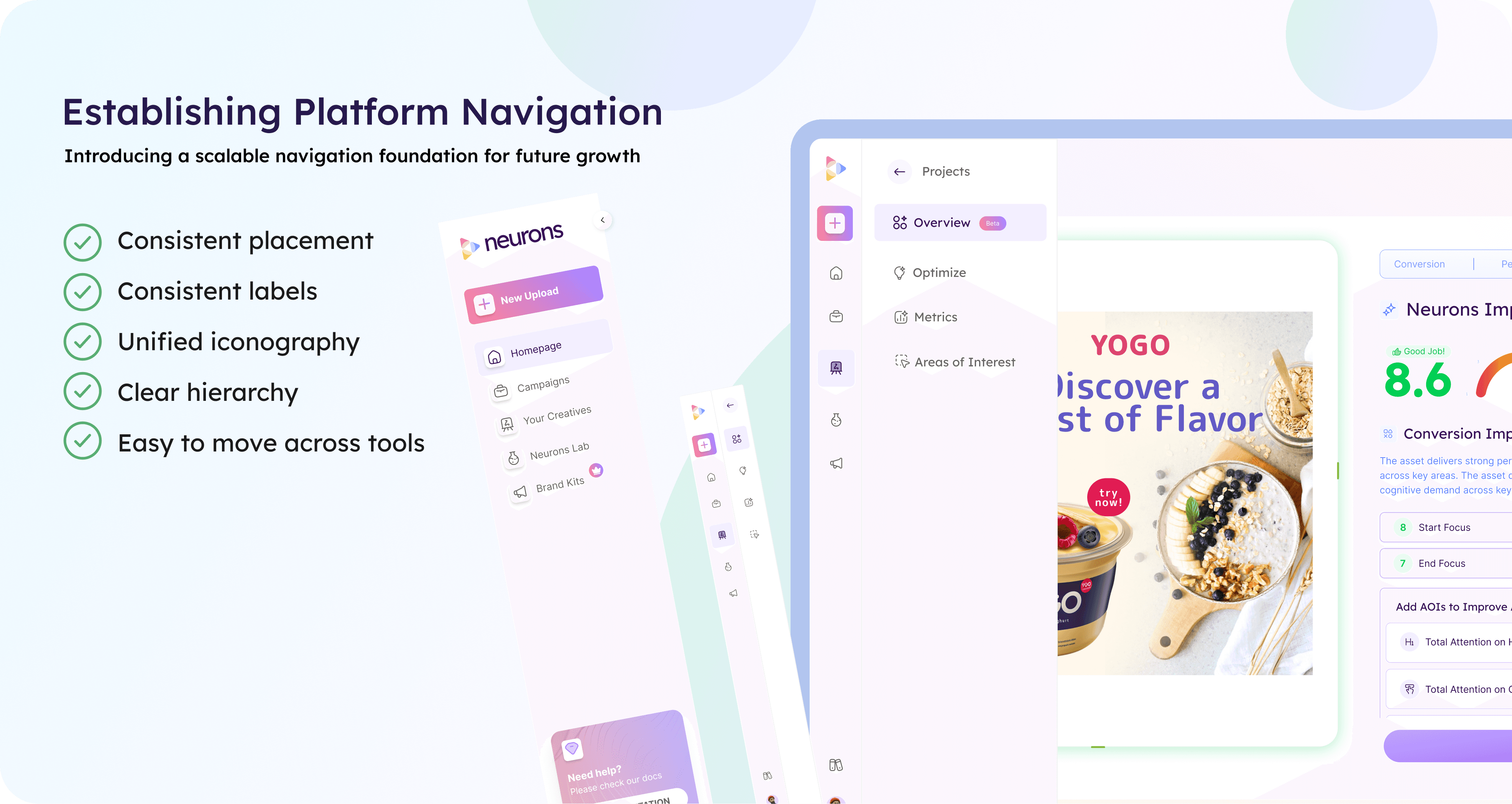
The navigation system was intentionally designed as a scalable platform layer capable of supporting future modules and workflows without introducing additional structural inconsistency.
Rather than optimizing navigation locally within individual tools, the redesign established a persistent global system.
Discoverability Through Modular Structure
The homepage introduced modular entry points designed around user intent rather than feature ownership.
Instead of exposing users to a flat list of tools, the experience grouped workflows into clear actions such as:
uploading assets
comparing creatives
generating reports
learning the platform
This reduced the need for users to understand the internal architecture of Neurons AI before taking action.
The modular structure also created opportunities for:
cross-tool discovery
progressive onboarding
engagement beyond primary workflows
Platform Cohesion
The redesign introduced stronger visual and structural consistency across the ecosystem.
Shared navigation, layout spacing, hierarchy patterns, and workflow framing created a more cohesive experience between:
Homepage
Folder View
Overview
Compare
Analysis workflows
This improved predictability and reinforced the perception of Neurons AI as a connected platform rather than a set of standalone interfaces.
Key Decisions
Introduced a dedicated platform entry layer
Created a homepage experience that balanced onboarding, orientation, and direct workflow access.
Unified navigation across workflows
Established shared hierarchy and navigation behavior across tools to reduce fragmentation and improve scalability.
Structured discovery around user intent
Reorganized feature access into modular workflow actions rather than isolated tools.
Outcome
The redesign established the first cohesive platform layer for Neurons AI.
Users gained:
clearer orientation upon entry
improved discoverability across workflows
more consistent navigation patterns
reduced onboarding friction
stronger continuity between tools
The platform also gained a scalable navigation foundation capable of supporting future modules and ecosystem growth without increasing structural complexity.
The result was a significant shift from:
tool-first interaction
to:platform-first experience.