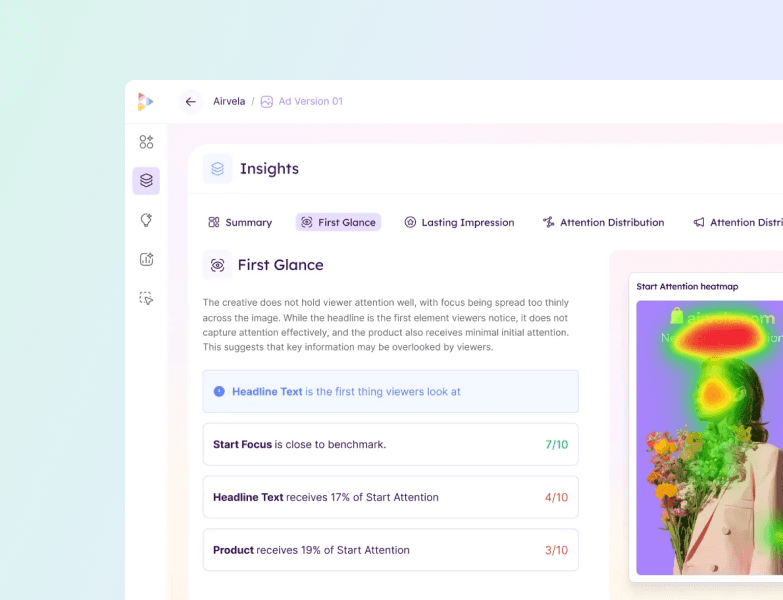
Decision-first workflow
Client
Neurons / Overview Page
Year
2025
Redesign of Neurons’ core analysis experience into a decision-first system, introducing a Neurons Impact Score and structured recommendations to help users act on complex AI-driven insights.
Scope of Work

Problem
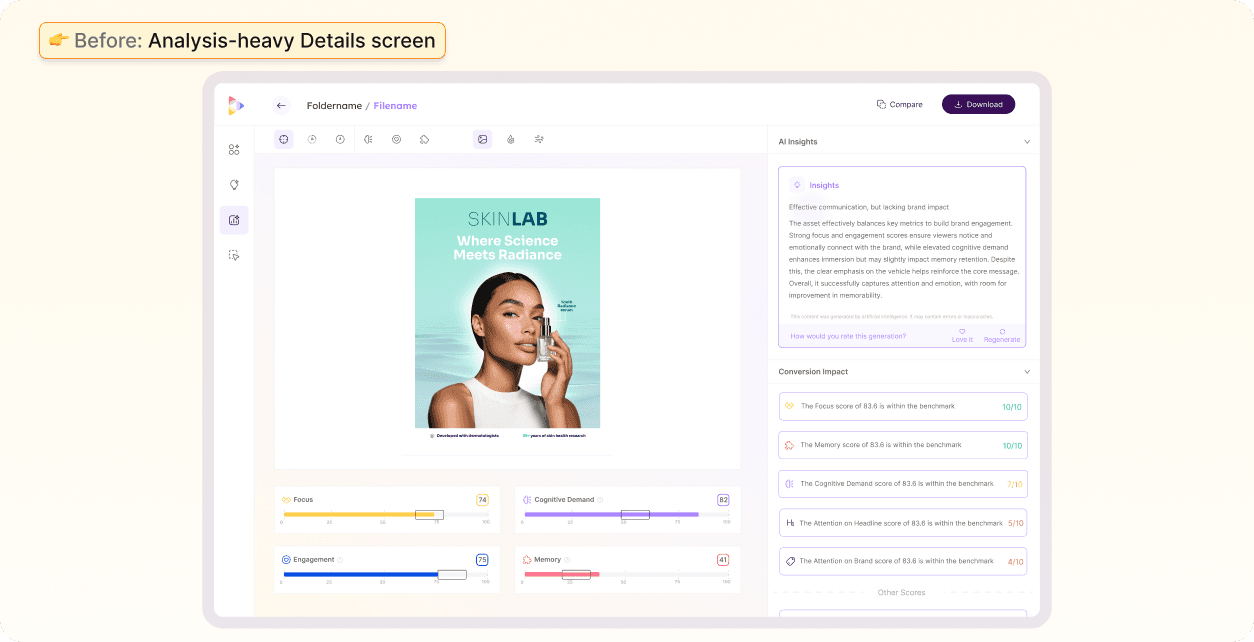
The product had two strong but disconnected experiences:
a simplified overview designed for quick decisions
detailed metric and AOI pages designed for expert users
In practice, this created a significant gap in understanding.
Non-technical users struggled to interpret raw metrics without guidance, while expert users still had to manually structure insights when preparing reports or communicating results.
This led to three key issues:
High cognitive load: users had to interpret multiple metrics independently
Fragmented understanding: insights were spread across multiple pages and contexts
External translation work: teams often recreated summaries outside the product
As a result, a large part of the analytical value was not directly consumable inside the product experience itself.
Insight
The core issue wasn’t lack of data, it was lack of clarity.
Users didn’t need more analysis. They needed a clear understanding of performance and what to do next.
Approach
I treated this as a system problem, not a UI problem, a mismatch between how the product collects context and how users are expected to make decisions from it.
This led me to redesign the experience across two layers: input and output.
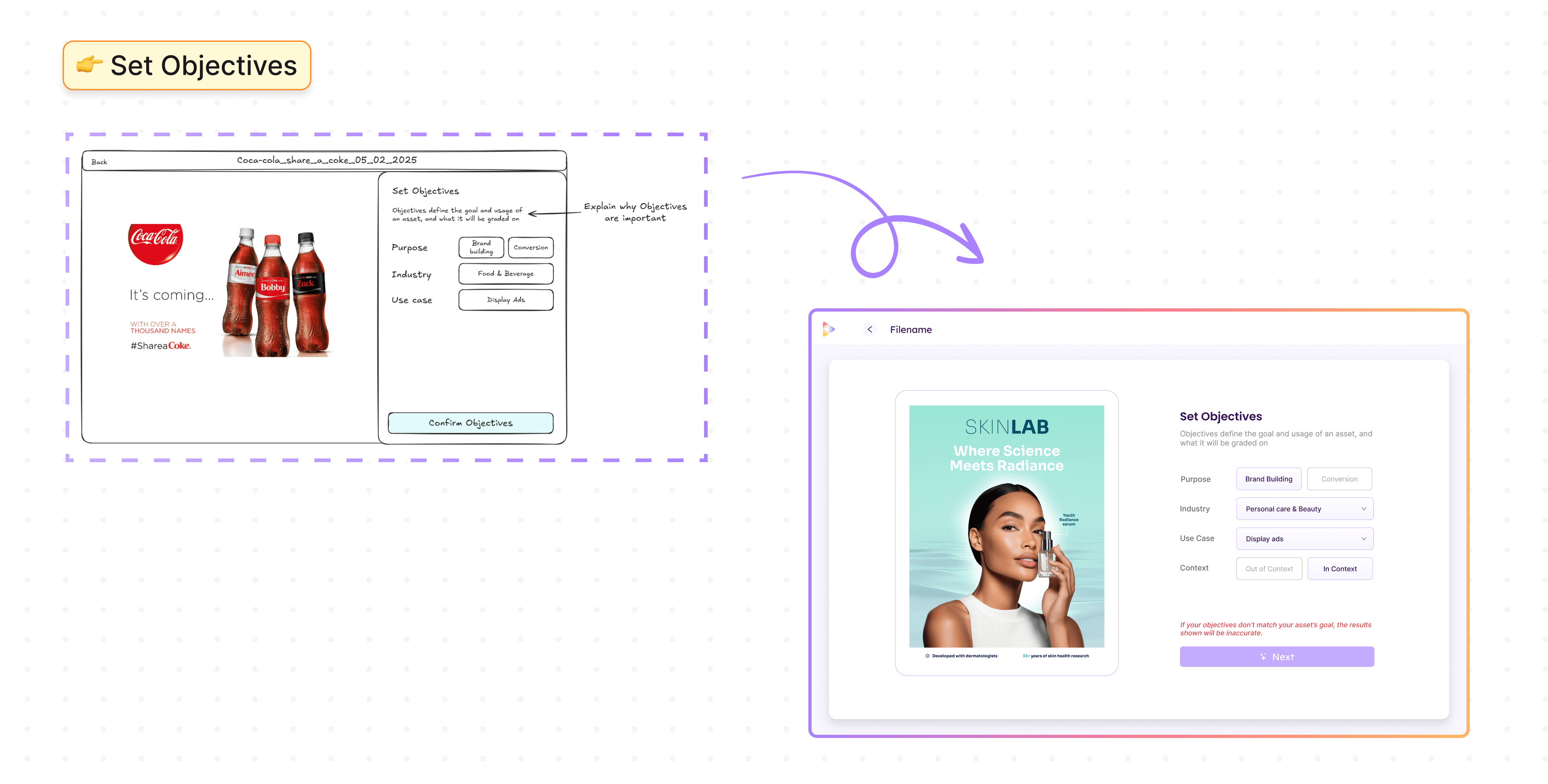
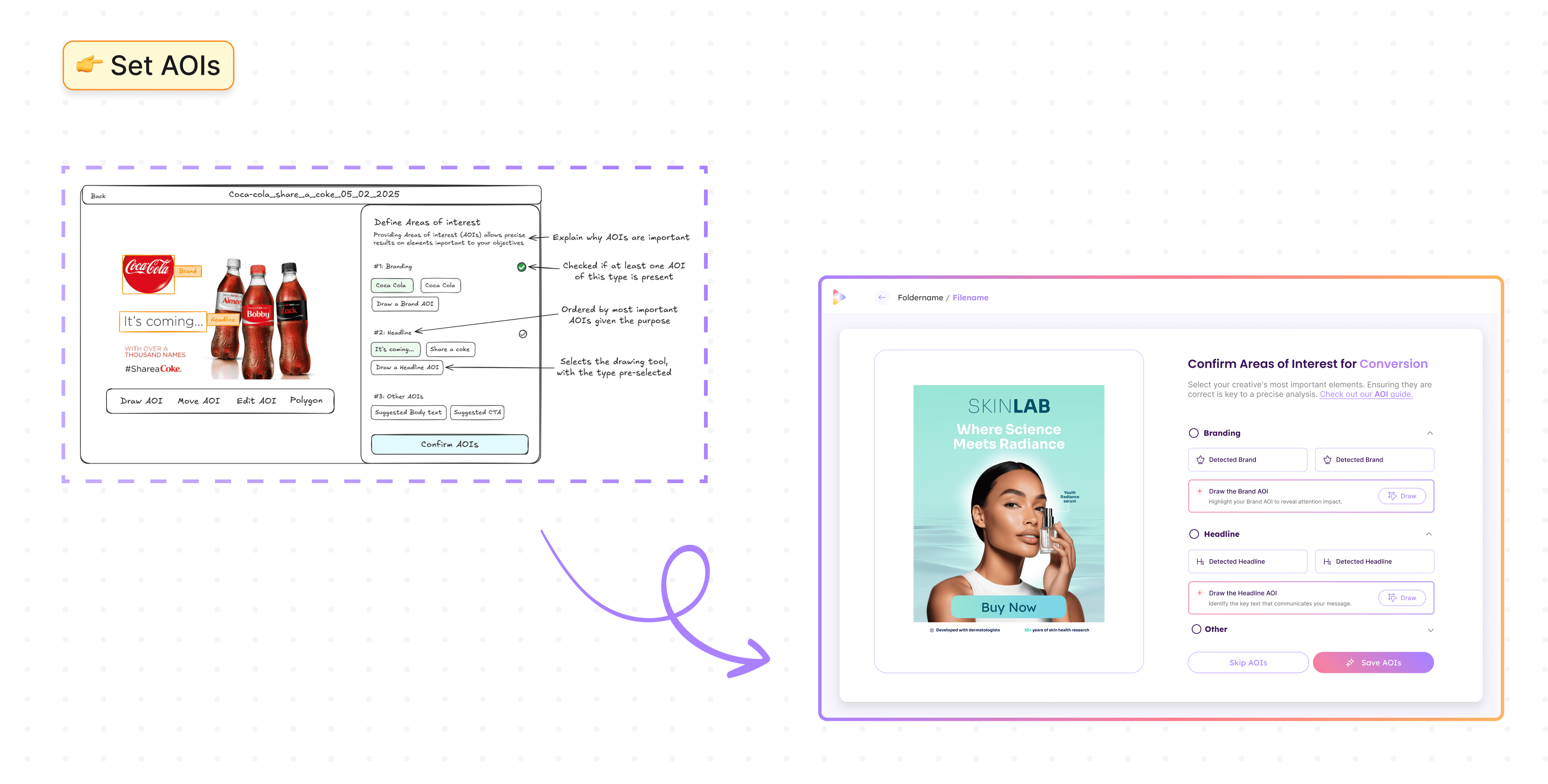
I introduced a structured setup flow for Objectives and AOIs to ensure every analysis starts with clear intent. This made results more consistent and meaningful, and reinforced that context is a prerequisite for evaluation.
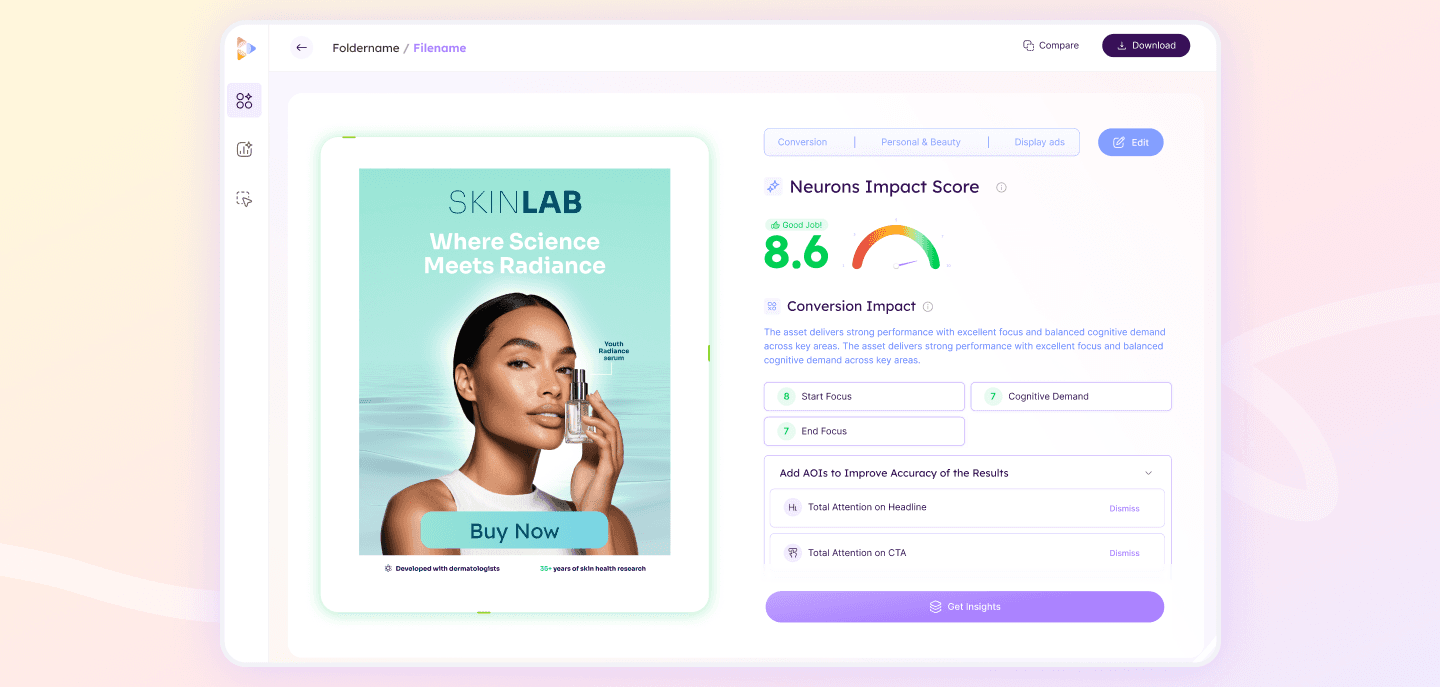
On the output side, I reduced reliance on interpretation by consolidating multiple different metrics into a single performance score and adding clear recommendations for next steps.
Finally, I structured the experience into a simple flow: define intent, evaluate performance, and guide action, turning analysis into a decision-making system.
Key Decisions
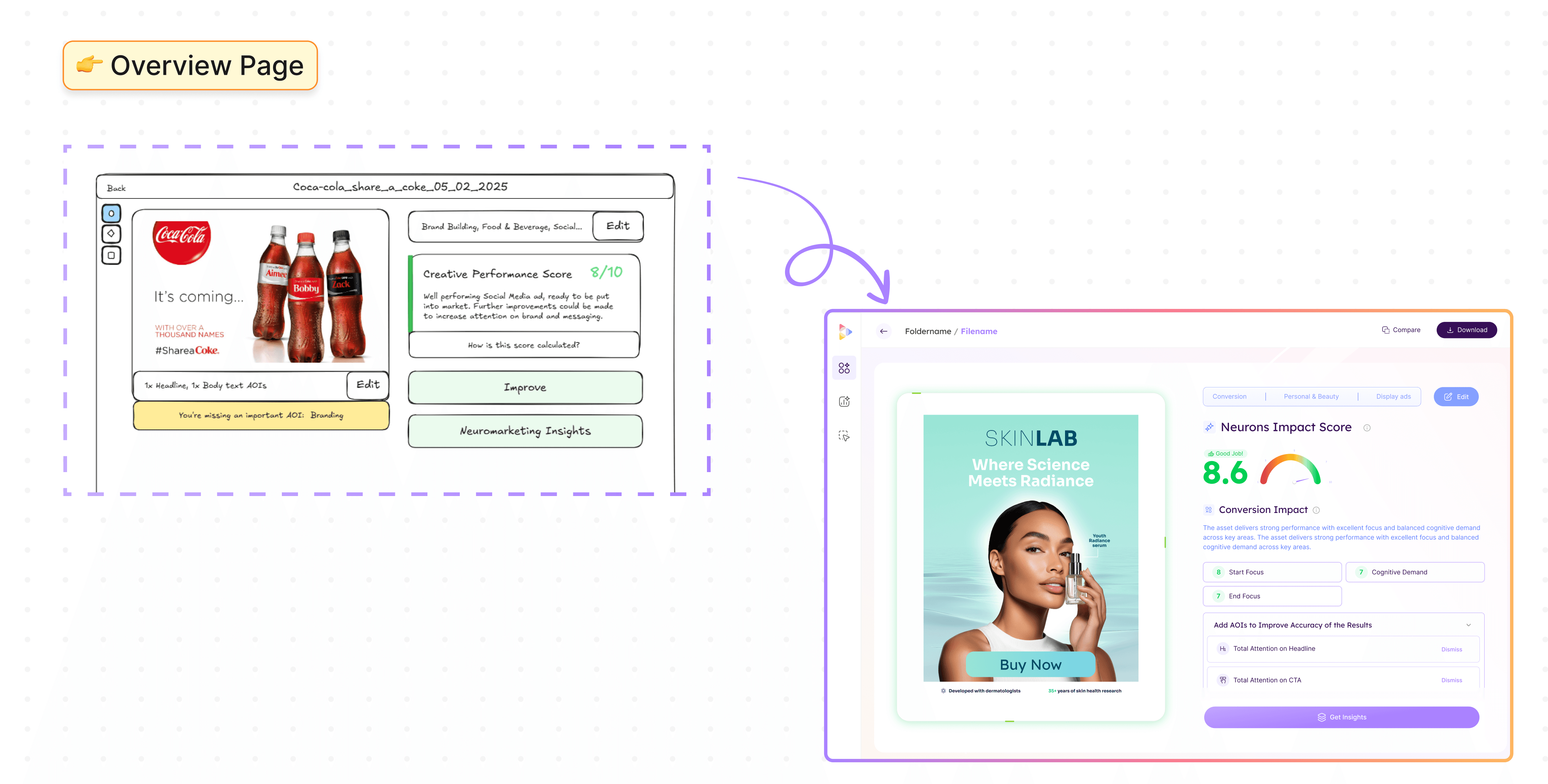
1. Introduced a decision-first overview layer
I designed a new Overview Page that:
summarizes performance in a single view
surfaces key signals upfront
provides explicit recommendations (Launch / Iterate / Optimize)
This shifted the product from exploration to guided decision-making.
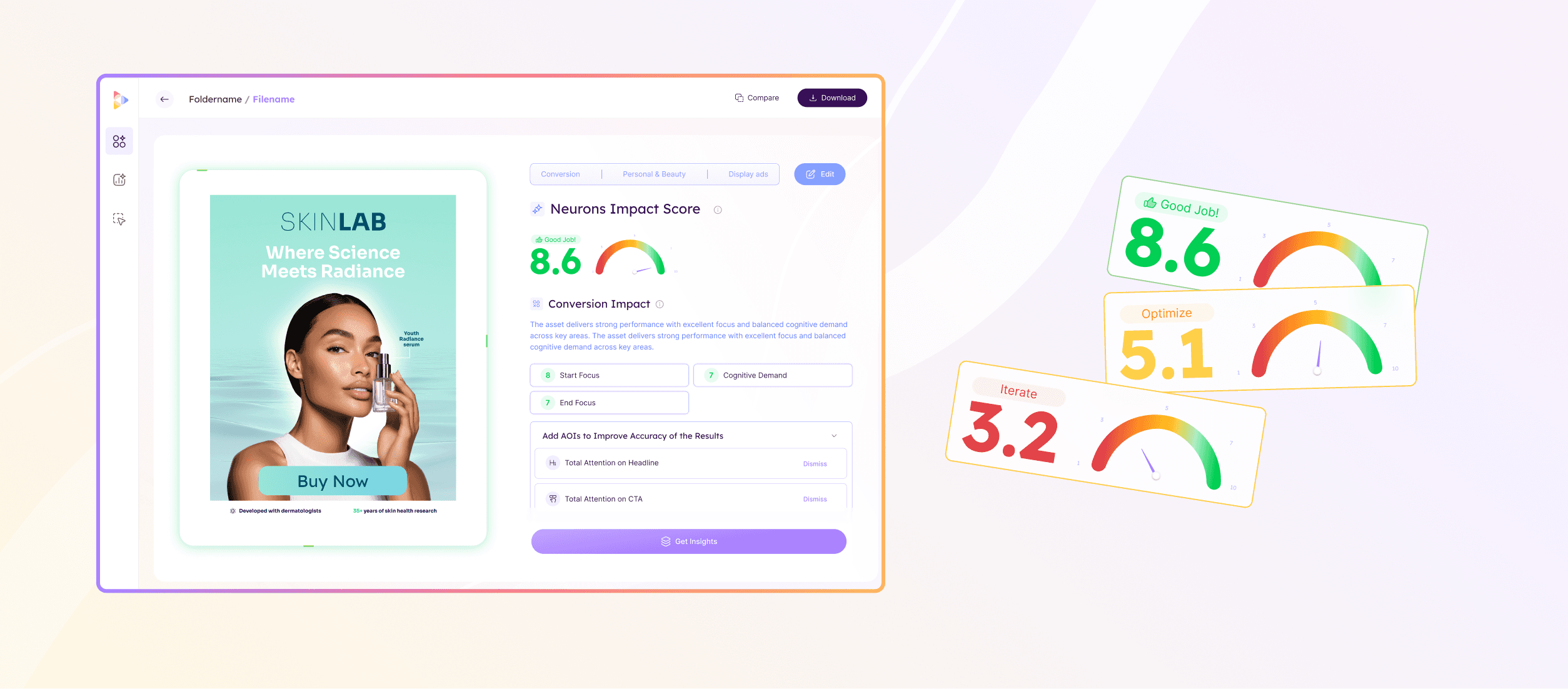
2. Created the Creative Impact Score (1–10)
To replace fragmented metrics and a low-priority color gauge, I introduced a unified score that:
aggregates key performance indicators
simplifies interpretation
enables fast comparison across assets
This became the primary entry point for understanding performance.
3. Added structured recommendations
Instead of leaving interpretation to the user, the system now provides a clear recommendation layer:
What to do next with the asset, based on performance and objectives
This removed ambiguity from the decision-making process.

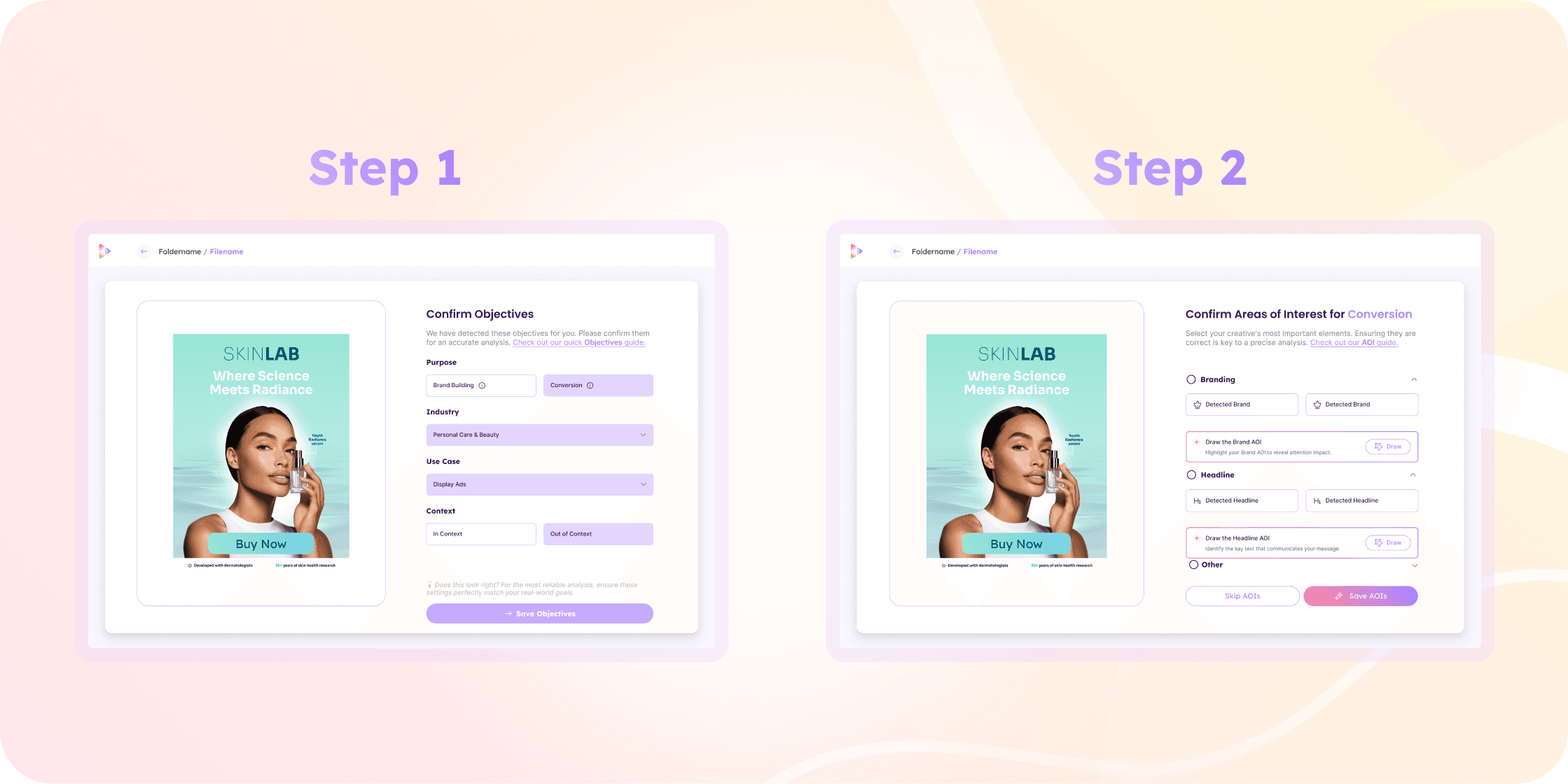
4. Introduced a two-step setup flow (Objectives + AOIs)
A major structural change was moving setup into a dedicated flow before analysis:
Step 1: Objectives setup
Users define what they are trying to achieve (e.g. brand building, conversion)Step 2: AOI setup
Users define Areas of Interest to ensure analysis is aligned with intent
This ensured that:
analysis always has correct context
results are meaningful and comparable
users cannot bypass critical setup steps
It also reinforced that intent defines evaluation in Neurons.
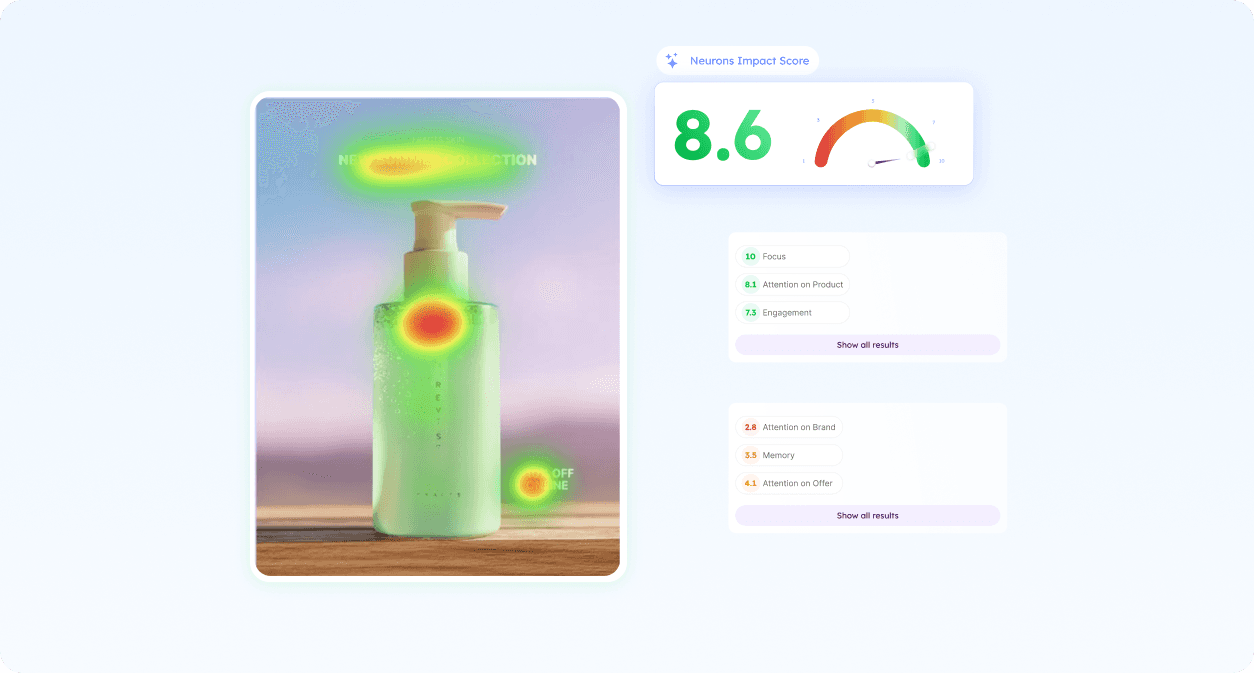
5. Prioritised metrics based on user intent
Metrics were grouped into:
primary (driving score)
secondary (supporting context)
This reduced cognitive load and aligned analysis with user goals.
Outcome
The redesign transformed Neurons from a tool that presents analysis into a system that supports structured decision-making from input to output.
It improved:
clarity of performance understanding
confidence in decision-making
consistency of analysis context
overall usability for non-expert users
The experience now guides users from:
defining intent → interpreting results → making decisions